
Advanced Machine Learning Built for Regulatory Integrity

The MyoLogIQ technological stack is engineered from the ground up to eliminate human subjectivity from physical sports compliance. By deploying highly specialized convolutional computer vision networks and secure time-series models, our infrastructure extracts objective, immutable structural features from standardized human imagery. This backend engine serves as an automated, mathematical auditing system - ensuring absolute data isolation, cryptographic security, and enterprise-grade validity for all sports federations.

Computer Vision Pipeline

Our proprietary computer vision pipeline completely bypasses generic skeletal or motion-tracking models, focusing entirely on high-resolution tissue and contour surface geometry. The engine instantly executes pixel-accurate deep learning segmentation, isolating the athlete's physical profile while automatically neutralizing environmental anomalies, clothing variations, and lighting noise. Once isolated, multi-layered edge-detection algorithms localize key spatial landmarks across regional structures. The system then maps these surface contours into a dense structural coordinate mesh - effectively converting raw, visual body shapes into highly structured mathematical vectors ready for chronological analysis.
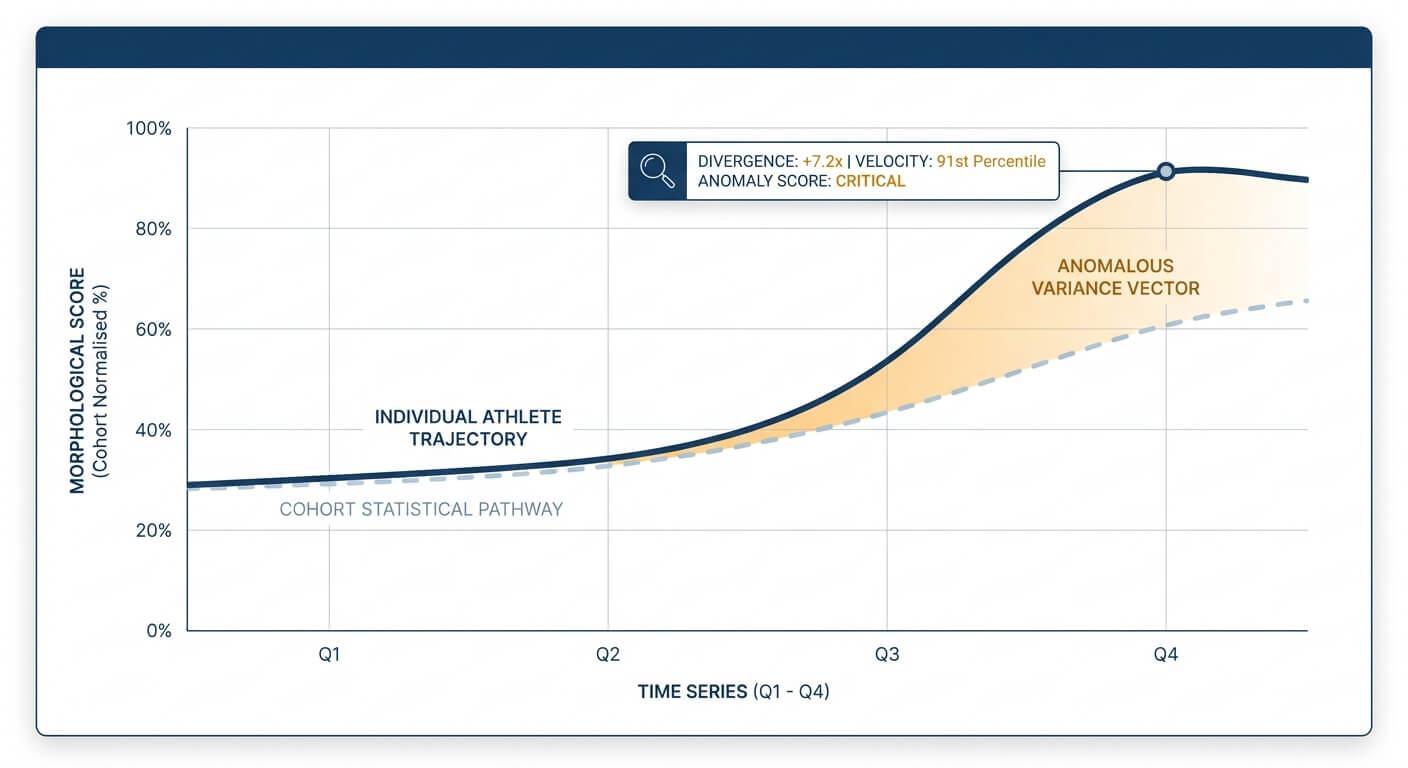
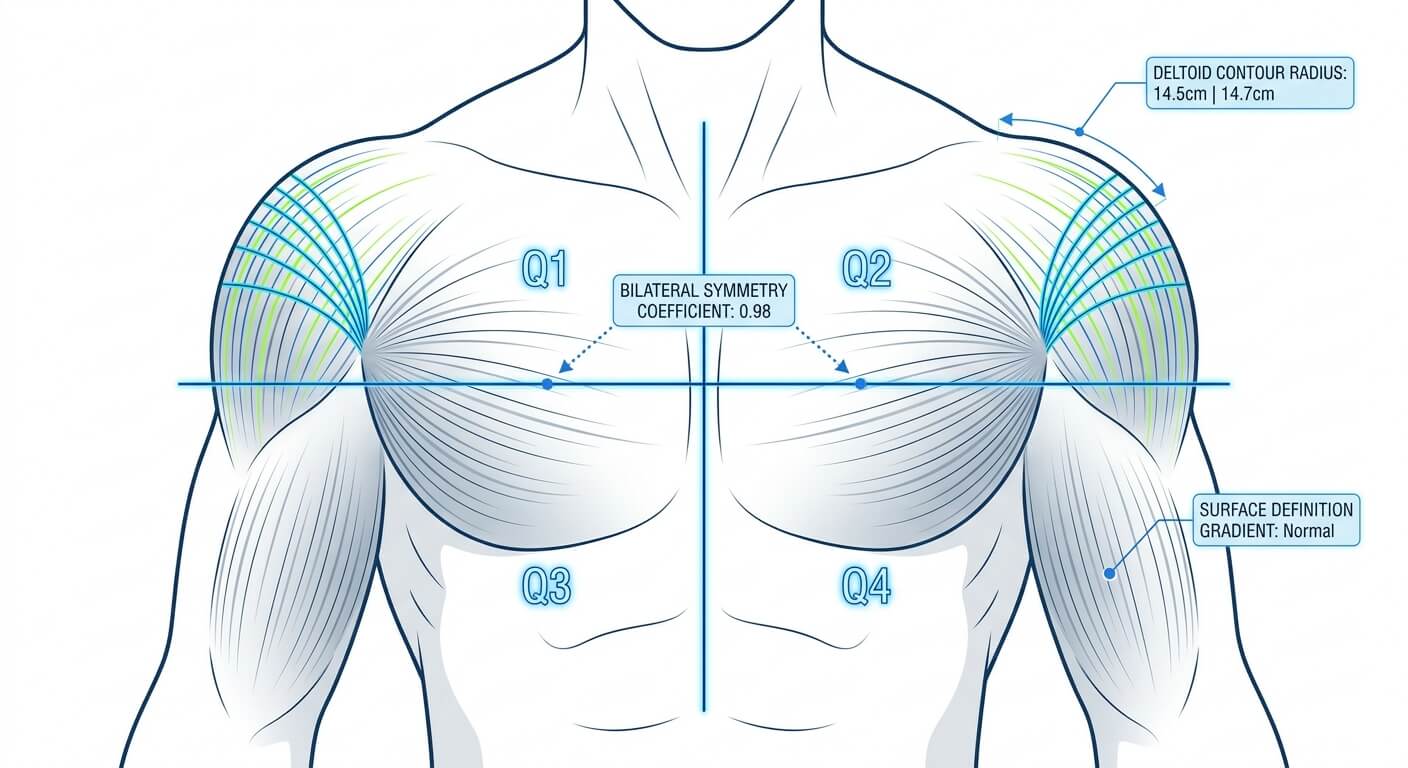
Diagram of the MyoLogIQ computer vision pipeline

Morphological Trajectory Modeling

Once the computer vision engine converts visual inputs into dense coordinate vectors, our longitudinal tracking layer processes the dataset as a chronological time series. This engine maps the exact velocity, acceleration, and magnitude of structural alterations across an individual’s historical timeline.

Rather than evaluating an athlete against rigid, static thresholds, our machine learning models construct a dynamic baseline calibrated against normalized datasets from specific athletic cohorts. The system continuously calculates the variance between the individual's actual trajectory (represented by the primary curve) and the expected statistical pathway of a clean cohort (represented by the baseline curve). By isolating acute deviations in tissue volume distribution or localized contour velocity, the engine identifies anomalous structural evolution that warrants targeted regulatory attention.

Diagram illustrating morphological trajectory modeling over time

Physiological Morphological Feature Extraction

To deliver an indisputable regulatory assessment, the engine translates global visual data into a discrete array of physiological morphological markers. By projecting a localized spatial coordinate matrix over isolated anatomical regions, the system acts as a digital caliper, measuring structural markers with millimeter-level precision.

The platform continuously extracts and logs key physiological parameters, including:

  • Bilateral Muscular Symmetry Coefficients: Quantifying micro-variations in structural alignment and volume between opposing left and right muscle groups.
  • Localized Tissue Contour Radii & Ratios: Measuring the exact geometric projection and curve velocity of specific muscle bellies (e.g., quadriceps, deltoids, and trapezius).
  • Surface Definition Gradients: Utilizing high-contrast edge-detection algorithms to evaluate changes in subcutaneous tissue profiles and localized vascular definitions.
  • Regional Volume-to-Height Proportions: Calculating localized muscle mass distribution relative to the athlete’s overarching skeletal framework.

By partitioning target muscle groups into distinct mathematical quadrants, the system isolates these markers from external noise like clothing or lighting anomalies. This dense, multi-dimensional dataset serves as the empirical foundation for longitudinal tracking—providing an objective, physical audit trail that completely removes human subjectivity from the compliance workflow.

Diagram illustrating physiological morphological feature extraction

Model Training & Validation

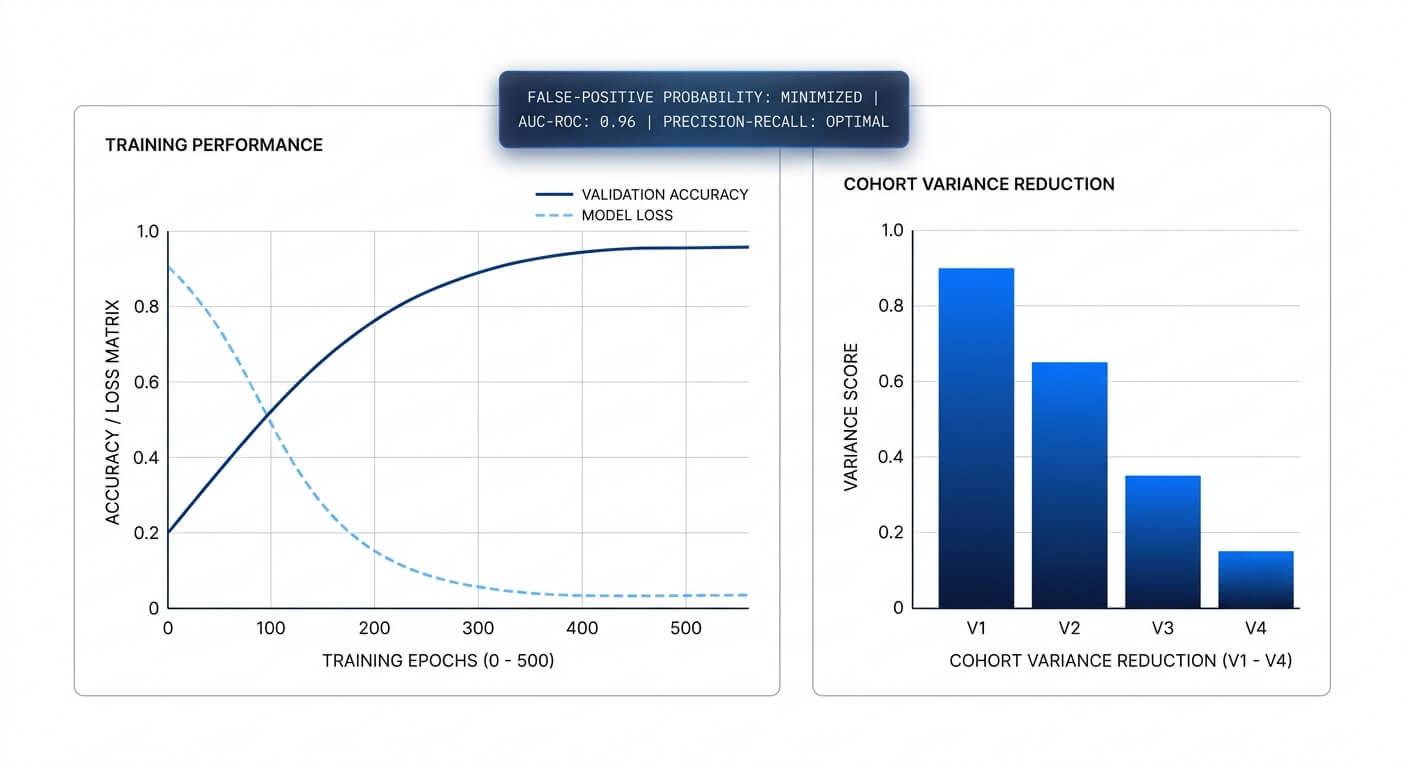
The integrity of the MyoLogIQ engine relies on a rigorous multi-stage training and validation framework engineered to minimize statistical variance, algorithmic drift, and false-positive probabilities to the absolute lowest achievable thresholds. Our underlying neural networks are trained on large-scale, highly curated datasets across diverse athletic disciplines, establishing a globally calibrated baseline for normal physiological variation.

To guarantee robust generalization, the pipeline undergoes strict cross-validation against extensive environmental edge cases—including varying camera hardware, complex lighting environments, and compressed image formats. Our engineering team prioritizes precision-recall optimization to ensure that the final output represents a highly conservative likelihood score. By mapping observed structural anomalies to physical markers scientifically correlated with substance-induced physiological changes, the platform provides a defensible data foundation that allows regulatory bodies to optimize testing resources with mathematical objectivity.

Diagram illustrating model training and validation

Security, Privacy & Data Governance

MyoLogIQ treats all morphological imagery and metadata as highly sensitive Personally Identifiable Information (PII), enforcing a strict zero-trust security architecture. The platform is engineered to fully comply with global data privacy frameworks, including the EU General Data Protection Regulation (GDPR) and the WADA International Standard for the Protection of Privacy and Personal Information (ISPPPI). Every data channel is locked down using enterprise-grade cryptographic protocols, implementing TLS 1.3 for all data-in-transit and military-grade AES-256 encryption for data-at-rest.

Absolute data sovereignty remains entirely in the hands of the adopting sports federation or regulatory body. Through a highly granular Role-Based Access Control (RBAC) framework, administrators define exactly who can access sensitive files—restricting visibility exclusively to authorized, authenticated compliance officers. To ensure maximum privacy, the underlying processing engine operates solely on pseudonymized, tokenized mathematical vectors, completely separating an athlete’s real-world identity from the analytical pipeline. Furthermore, an immutable, cryptographically signed audit log tracks every instance of data interaction, ensuring uncompromised compliance under international legal scrutiny.

Diagram illustrating security, privacy and data governance

Algorithmic Equity & Bias Mitigation

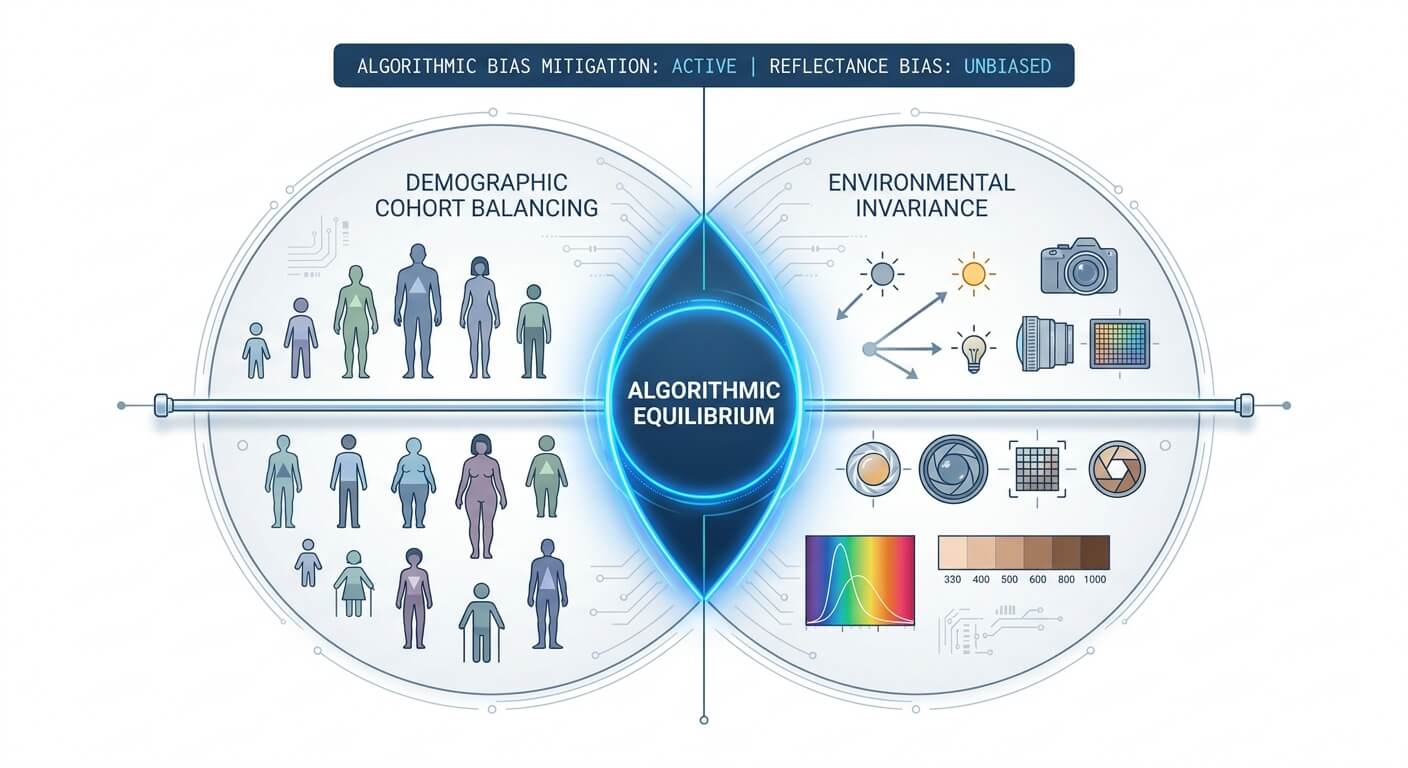
To ensure absolute regulatory objectivity, the MyoLogIQ core engine is continuously optimized for algorithmic fairness. A primary vulnerability in generic computer vision models is demographic and environmental skew, where variations in skin tone, gender representation, or ambient lighting can introduce systemic statistical bias. Our engineering framework proactively addresses this by enforcing rigorous demographic balancing across all training datasets.

The morphology pipeline utilizes specialized illumination-invariant algorithms and skin-reflectance normalization layers calibrated across the full Fitzpatrick skin-type spectrum. This ensures that the pixel-level body segmentation and feature vector extraction remain mathematically consistent regardless of the athlete's ethnicity or testing environment. By continuously benchmarking our models against algorithmic equity metrics, we ensure that the generated risk scores reflect objective physiological morphological variance, entirely decoupled from demographic variables.

To learn more about our commitment to non-discrimination and human-in-the-loop oversight, read our full Ethics & Safety page.

Diagram illustrating algorithmic equity and bias mitigation